The Compass Points Activity for Nursing Exam Review
Time to read 4 min

Time to read 4 min
Table of contents
As a nursing instructor, the time before an exam is critical. Especially that first exam. It sets the tone for the rest of the semester, and helping students feel prepared, energized, and hopeful is something we aim to achieve. The challenge? Many review activities don't quite fit our learning objectives, can feel repetitive (hello case studies), or overly complicated to create, like a Jeopardy! board.
The Compass Points is a simple, practical, low-tech nursing exam review activity to help students review, organize the course material, and identify key priorities before an exam. This activity encourages participation from everyone without needing any tech or hours of prep.
The Compass Points Activity is effective because it:
This is a low-tech active learning strategy.
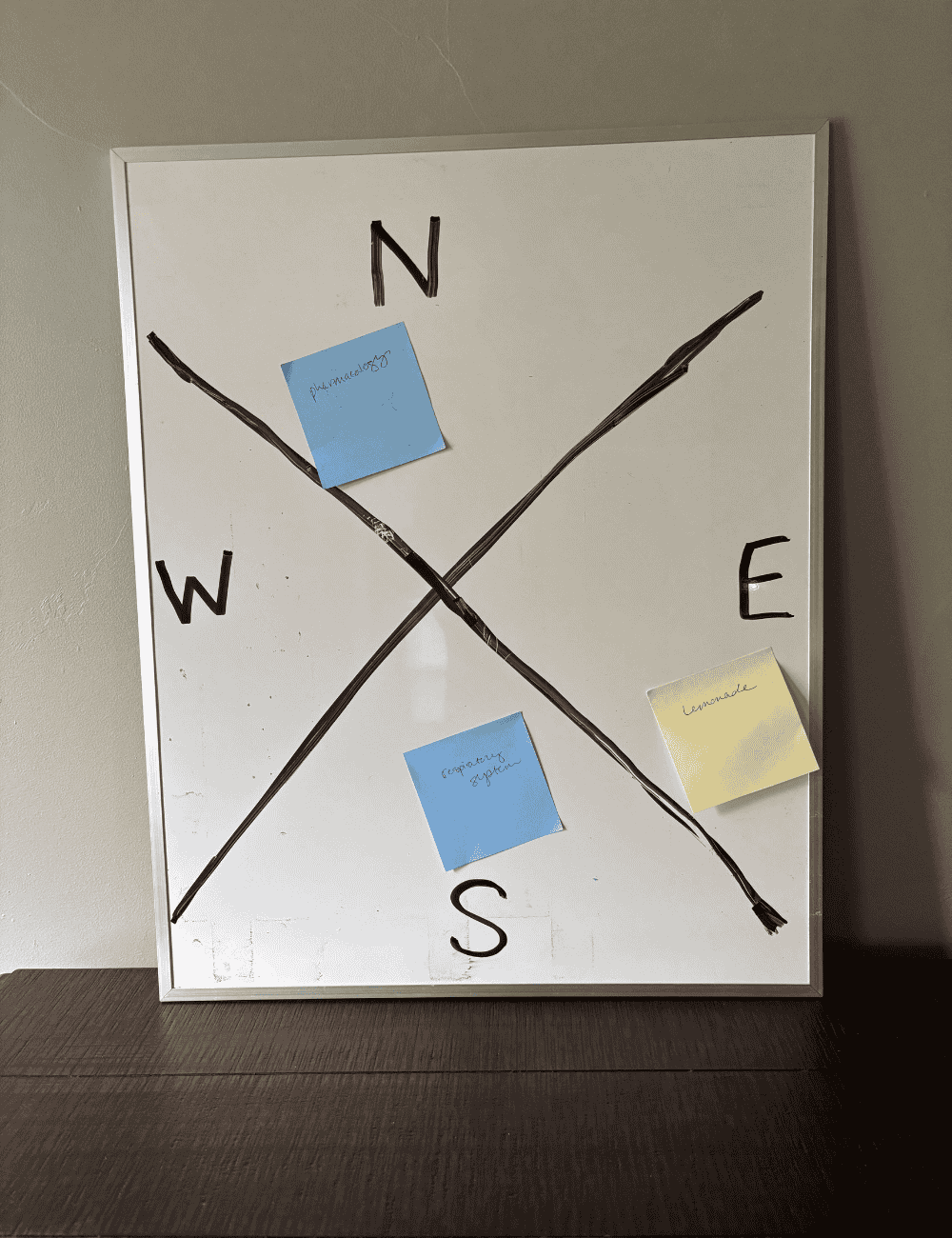
Draw the compass shape and label the directions (N, S, E, W).
This drawing could be done on any large surface. A whiteboard would work best. But you could also use chart paper or a blank wall, and painter's tape to draw the lines.
Next, identify what each direction means. You can do this verbally or via a slide.
Next, give each student or small group of students a stack of sticky notes and ask them to write one response for each direction.
As they finish, they can go up to the board and place their sticky notes in the correct quadrant of the compass.
Amazing! 🤩 You just completed a nursing exam review activity!
Once all students have placed their sticky notes on the board, you can begin to debrief the activity. Review each section, grouping similar ideas and looking for patterns.
This same format can also help during clinical orientation:
North (Need to Know) – Essential unit policies, high-priority patient safety steps.
South (Suggestions) – Tips for teamwork, charting shortcuts, or communication strategies.
East (Excited) – Skills they're eager to practice on the unit.
West (Worrisome) – Concerns about patient assignments, unfamiliar equipment, or clinical expectations.
This variation not only breaks the ice but also helps you quickly identify where students may need extra guidance before their first shift.
Looking for another idea to add to clinical orientation? This article reviews how you can orchestrate a perfect orientation day.
To make the most of this as a nursing exam review activity:
By adding the Compass Points to your toolbox of nursing exam review activities, you give students a creative, low-tech way to share what they know, voice their concerns, and learn from each other.
Compass Points is a low-prep, high-impact review activity. It helps students organize their thoughts before an exam while encouraging full-class participation without relying on tech or a complicated setup.
Each direction prompts a different type of reflection. Students identify what they’re confident about, what worries them, what they need to know, and what advice they’d offer peers.
The activity is flexible and can be adapted beyond exam prep. It works equally well for clinical orientation or any setting where students need to bring concerns to the surface, reflect on their own learning, and set priorities.
Martha Johnson
Martha Johnson, MSN, RN is a nurse educator and the creator of BreakoutRN. She helps nursing faculty build active learning into the classroom and clinical setting, one practical idea at a time, using tools that support clinical judgment, engagement, and real-world nursing practice.
BreakoutRN offers a growing library of active learning resources, including unfolding case study card decks, clinical decision cards, tabletop case study kits, worksheets, templates, and educator guides designed to strengthen clinical judgment without overwhelming faculty.
Each tool in the BreakoutRN store includes detailed descriptions, ideal class sizes, and estimated time to complete, so you can quickly find what fits your content, student level, and available time. You can also sort by topic area or use the bundle builder to mix and match based on your curriculum needs.
Yes! All of the BreakoutRN resources are designed with flexibility in mind. Whether you’re teaching in a classroom, lab, or clinical environment, the activities can be adapted to fit the setting. Tools like the Clinical Decision Cards and Unfolding Case Study Decks are perfect for small-group discussions, pre/post-conference, or even as part of simulation debriefs.