

Table of contents
📝 Remember the learning styles quiz?
Many of us remember taking a quiz at some point in school to determine our "learning style," whether we are a visual, auditory, verbal, or kinesthetic learner.
Research has found that there is no evidence that supports teaching to a person’s specified learning style results in better learning (see this article).
The truth seems much more complex. Learners benefit when educators use varied teaching modalities, including visual elements. This article will focus on using student-generated visual organizers as a teaching tool in nursing education.

🧪What the Research Shows
Visual examples help with retention, evoke curiosity and engage the learner in creating, which can all help the learning stick. And research across disciplines has shown that when graphic organizers are used, student learning improves (Strangman, Vue, Hall, & Meyer, 2004).
Visual organizers include elements such as timelines, flow charts, or annotated diagrams. They are most effective when they use visual cues, like color-coded arrows or annotations, to demonstrate 'constructive alignment,' helping students see exactly how the content connects to patient care or to their evaluations (Awidi, Paynter, & Evers, 2019)
Using visual organizers to build engaging nursing lectures taps into a powerful aspect of how the human brain learns. Here are a few learning theories that support the use of visuals in learning:
🧬 Dual Coding Theory (Allan Paivio)
Dual Coding Theory suggests that combining visual and verbal inputs strengthens learning because the brain stores the information in two formats, making it easier to retrieve later.
📚 Application: Presenting nursing concepts visually and verbally helps reinforce memory retention. For example, pairing a diagram with a verbal explanation of the cardiac cycle can improve understanding and recall.
🏗️ Cognitive Load Theory (John Sweller)
Cognitive Load Theory emphasizes that reducing mental strain through structured visual aids helps learners focus on essential information without becoming overwhelmed.
📚 Application: Visual organizers like flowcharts or concept maps can help reduce cognitive load by breaking down complex information into manageable chunks, boosting students' confidence in their understanding.
🚶🏽Adult Learning Theory (Malcolm Knowles)
Knowles’s Adult Learning Theory posits that varied instructional methods—especially those using visuals—boost motivation and relevance, which is critical in adult education.
📚 Application: Visuals combined with active learning (like annotating or organizing information) make content more engaging for adult learners, such as nursing students, who benefit from interactive and applied learning.
💻 Information Processing Theory
This theory supports that the brain can process visuals up to 60,000 times faster than text, making visuals particularly effective for presenting detailed or complex information quickly.
📚 Application: In fast-paced fields like nursing, where quick information retrieval is crucial, visual organizers help streamline the learning process. A graphic organizer on infection control protocols, for example, provides a quick visual summary that students can easily refer to.
🧠 Spatial and Visual Memory (Ulric Neisser)
Cognitive psychologists like Ulric Neisser have found that humans naturally use spatial and visual memory, making organizing nursing concepts visually a powerful tool for understanding and retaining information.
📚Application: Mapping out body systems or drug classes visually helps nursing students connect concepts spatially, aiding deeper comprehension and retention. Organizers like Venn diagrams or comparison charts are effective for topics like pharmacology and anatomy.
These theories support the idea that visual organizers can be an excellent teaching tool, empowering students and giving them ownership of their learning. Let’s discuss how to use them:
📚Using Graphic Organizers as a Nurse Educator
Graphic organizers work best when the learner chooses and creates the organizer themselves. As students often struggle with “how” to take notes, teaching them about the different types of graphic organizers can be an excellent way to build note-taking and study skills.
Graphic organizers can help students notice and evaluate information they have learned differently. A sketch, chart, or diagram can allow students to make connections, create scaffolding, and categorize information for easy future reference.
The concept map is the most common visual organizer used in nursing education. There are many resources, tools, and examples online if you want to learn more about concept mapping.
For this article, I want to review a few other practical, easy-to-implement visual organizers. Each one has a template link that you can access in Canva and modify to fit your course or clinical. Here are a few examples:
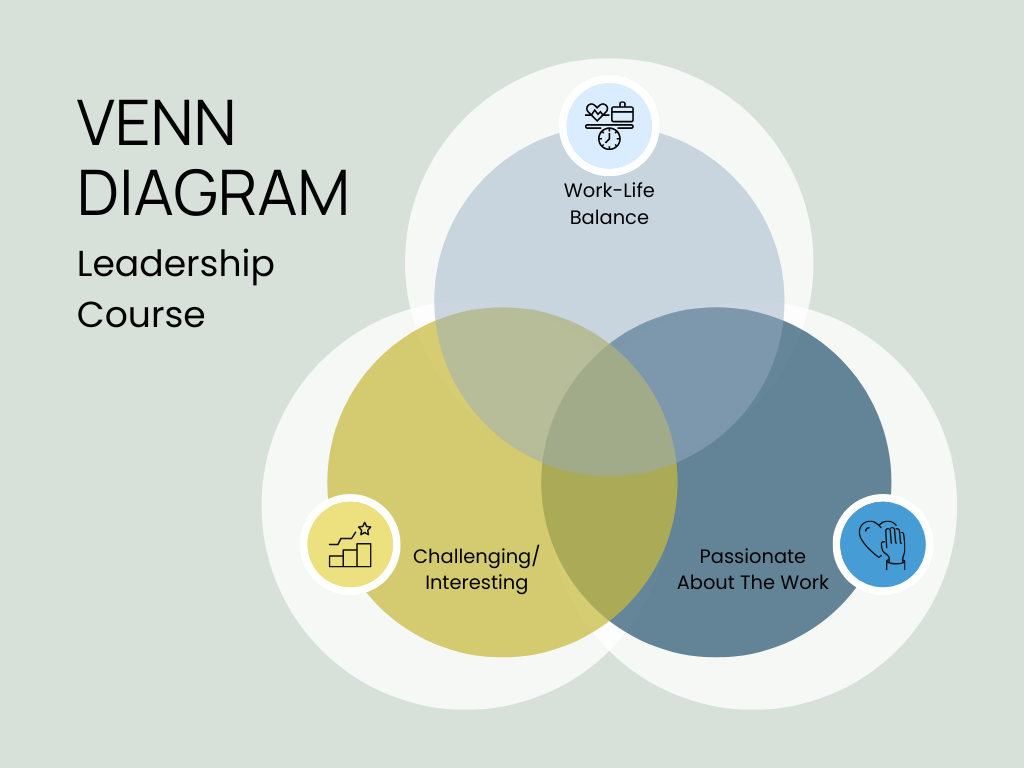
Venn Diagram
Use this to compare and contrast two or more ideas or concepts.
💡 Ideas for Application
Students who are researching types of nursing roles they may be interested in for a leadership course.
In post-conference, comparing three patients with similar diagnoses.
-
Comparing different types of hypertensive medication in a pharmacology course.
T-Chart
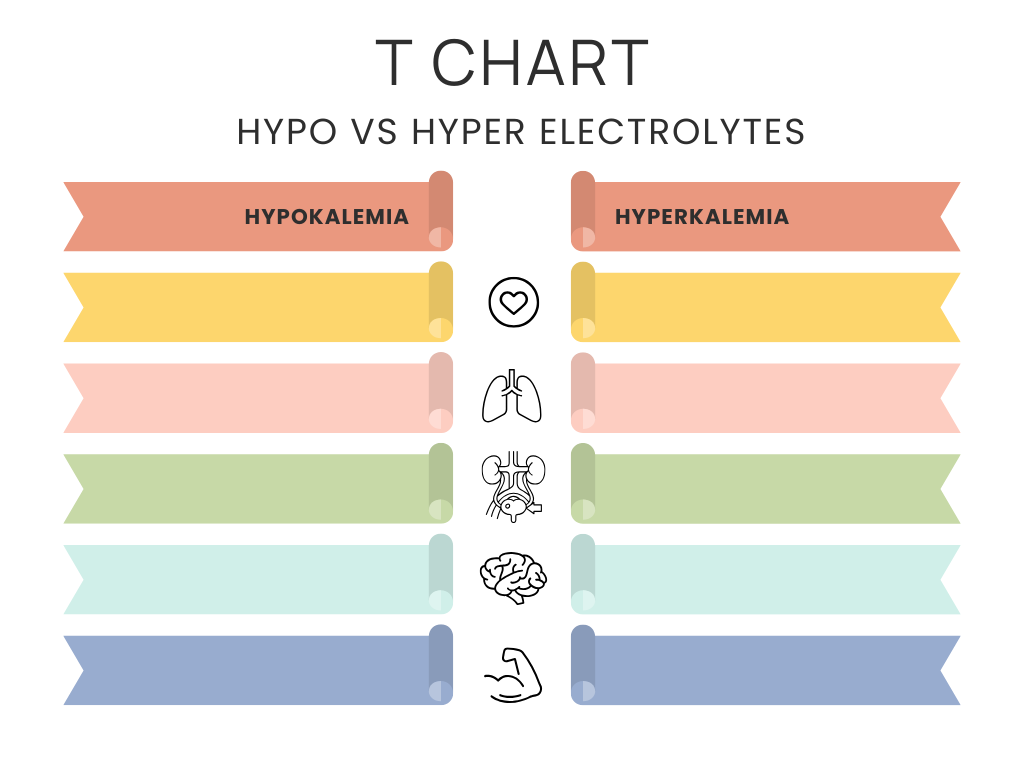
Use this chart to break down large concepts into smaller chunks.
💡 Ideas for Application
Students create a chart for assessment findings in hyper and hypo versions of electrolyte imbalances.
Use the chart to compare “before” and “after” nursing interventions in post-conference.
Compare findings in left vs right-sided heart failure.
KWL Chart
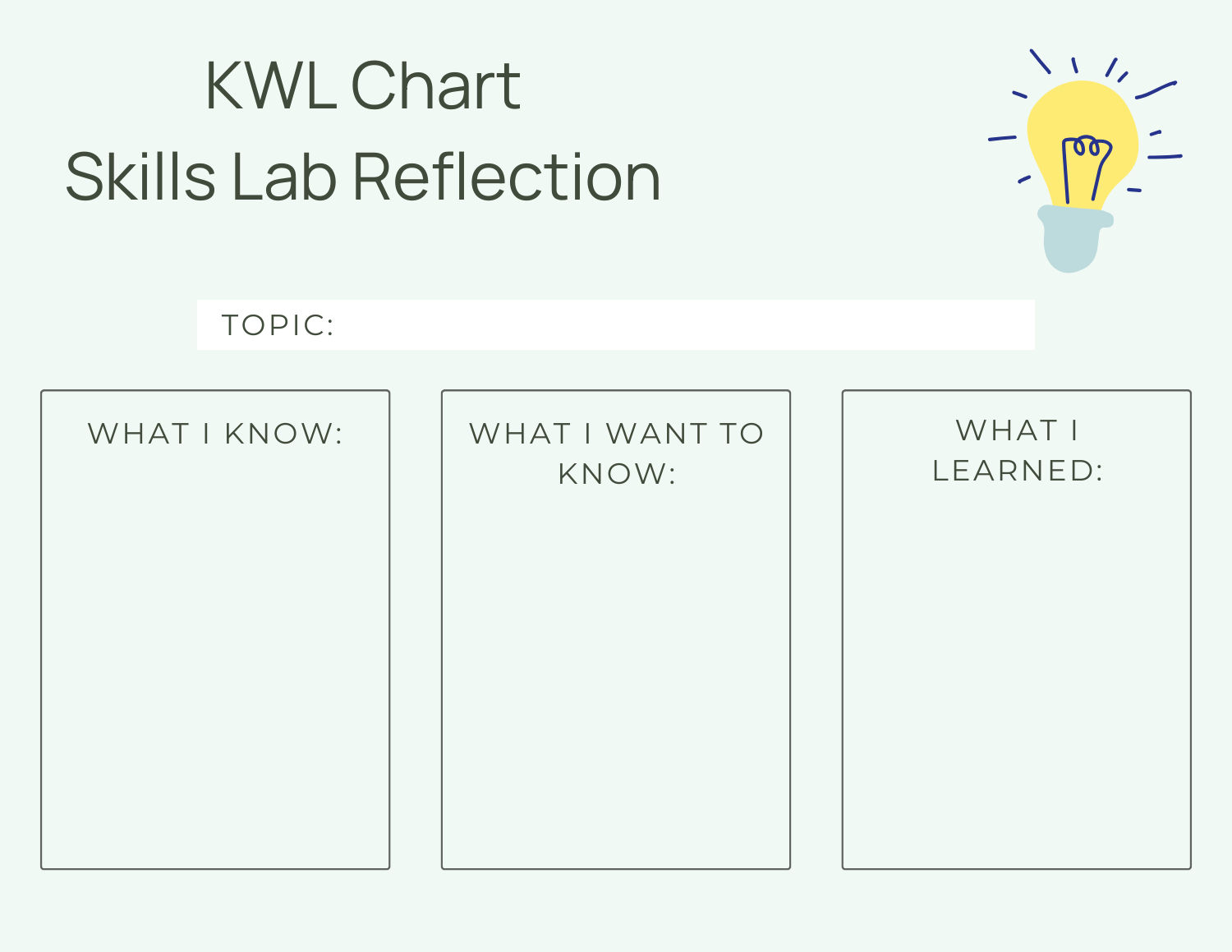
Use this organizer for reflection exercises or as an assessment during a lesson.
💡 Ideas for Application
Students reflect on what they know or have experienced regarding a nursing skill before learning it in the lab.
Measuring knowledge at the end of a unit or before an exam.
As a formative clinical assessment tool, asking students to complete it at the beginning of a clinical rotation and at the end.
Cycle Chart
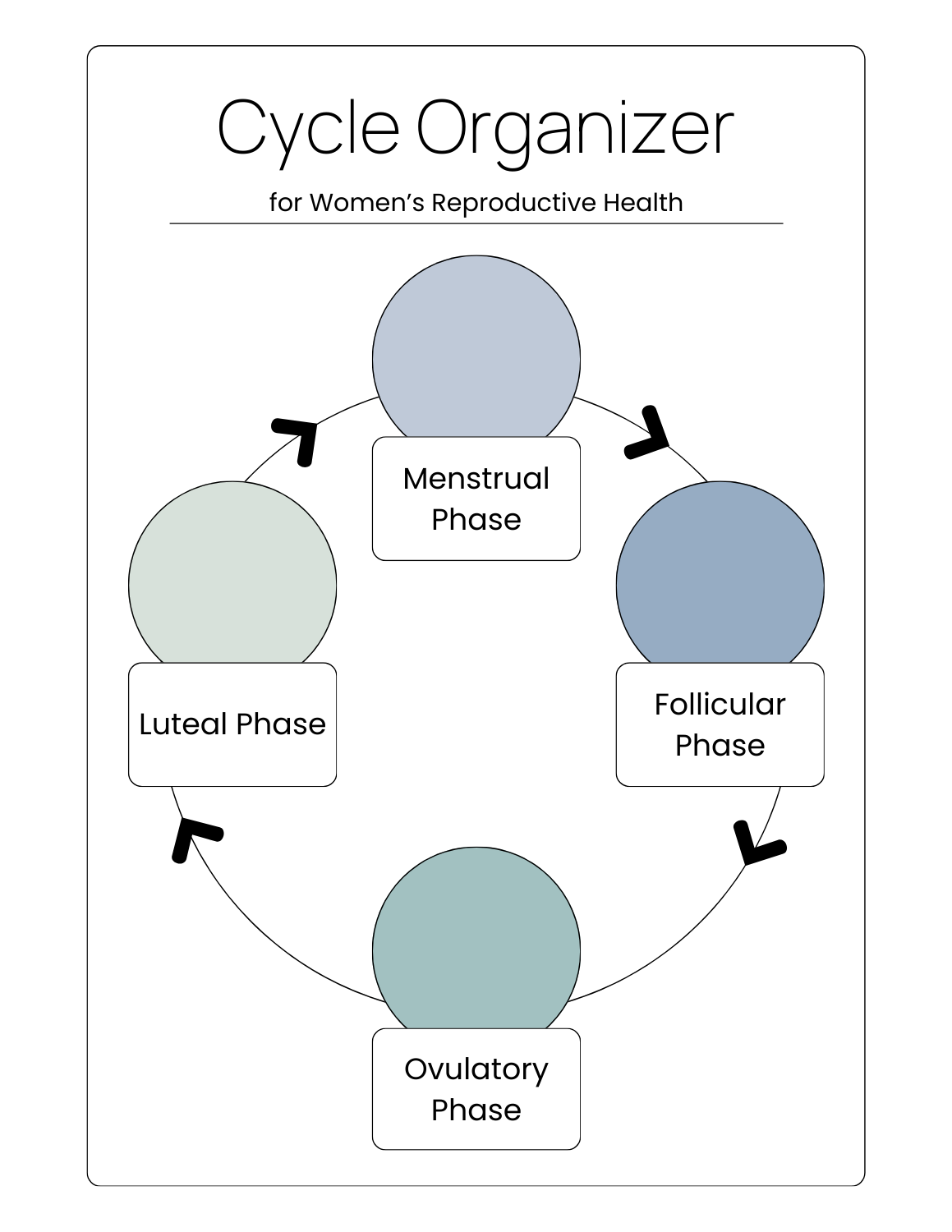
Use a cycle chart for learning a process that repeats itself or concepts that frequently return to a beginning step.
💡 Ideas for Application
Students add notes to each phase of a menstrual cycle when learning about women’s reproductive health.
When applying the nursing process to a clinical patient, students fill in their specific actions for each step.
For expanding or reviewing pathophysiology, there are loads of cyclical processes there!
💡Other Ideas for Using Graphic Organizers to Create Engaging Nursing Lectures
There are so many ways to use visual organizers in your classroom or clinical!
Visual organizers can also be excellent starting points for discussion. Invite students to share their work, either in pairs, small groups, or the whole class.
This can serve as a formative assessment, allowing you to give in-the-moment feedback and direct the student’s thinking.
Build on the organizer after each unit, allowing students to make connections across a semester of work.
Use digital tools or include audio or video in graphic organizers. Many virtual concept map creators (including one of my favorite programs, Canva, offer virtual whiteboards) or software like Padlet or Mote allow for multimedia notes.
Incorporating visual organizers can be a great way to entice curiosity, develop a deeper understanding of complex topics, and encourage students to take further ownership of their learning.
References
Awidi, I. T., Paynter, M., & Evers, U. (2019). Visual organizers and scaffolding the student learning experience in higher education. Journal of Educational Technology Systems, 0(0), 1-21.
Strangman, N., Vue, G., Hall, T., & Meyer A. (2004). Graphic Organizers and Implications for Universal Design for Learning: Curriculum Enhancement Report. Wakefield, MA: National Center on Accessing the General Curriculum. (Links updated 2014)
Conclusion
Visual organizers strengthen understanding and retention. When students translate nursing concepts into diagrams, charts, or maps, they are processing information more deeply and storing it in multiple ways, which improves recall and application.
Ownership increases engagement. When learners create their own organizers instead of filling in pre-made templates, they move from passive note-taking to active meaning-making and take ownership of their own learning. They don't have to be perfect illustrations to be effective.
Structure reduces overwhelm. Nursing content is dense and complex. Visual frameworks like Venn diagrams, T-charts, KWL charts, and cycle charts help students break information into manageable pieces.

Martha Johnson
Martha Johnson, MSN, RN is a nurse educator and the creator of BreakoutRN. She helps nursing faculty build active learning into the classroom and clinical setting, one practical idea at a time, using tools that support clinical judgment, engagement, and real-world nursing practice.
Frequently Asked Questions
Do I need artistic or tech skills to use visual organizers in my classroom?
Not at all. Most visual organizers involve simple shapes, circles, lines, boxes, arrows. The goal is clarity, not creativity. Even a quick hand-drawn organizer on a whiteboard can be powerful when students are the ones filling it in.
Where does a graphic organizer fit into my lecture?
Graphic organizers work well at multiple points in learning. They can be used before a lesson to assess prior knowledge, during a lesson to organize new content, or after a lesson to synthesize and apply concepts. They are especially helpful when introducing complex or material that lends itself to compare/contrast differences.
Aren't concept maps the most effective visual organizer for nursing education?
Concept maps are common in nursing education, but they are not the only option. Venn diagrams, T-charts, KWL charts, and cycle charts can sometimes be simpler and more accessible for students who feel overwhelmed by large concept maps. Offering variety allows students to experiment and discover what supports their learning best.

