

Table of contents
🥱 Does Lecture = Bored Students?
I remember preparing for my first theory course as a nursing instructor. I had well-thought-out PowerPoint slides and an almost word-for-word script to cover my first section on fluid and electrolytes. I was ready, and I knew that my organized tables and interesting images would help my students stay engaged and achieve incredible scores on their first exam.
Well, it didn't quite work out that way. I shared my awesome slides, but they still had that glazed-over look in their eyes. My students were bored, and I needed to fix that.

🏁 Getting started with active learning
I started researching active learning strategies in nursing education and slowly began to change my classroom. Over time, I moved away from instructor-led lectures and toward student-focused activities. I share many of the ideas, practical instructions, and worksheets for my favorite activities at the Idea Bank (where you are now!).
Then, I heard about an escape room.
📚 What is an educational escape room?
An educational escape room is a hands-on, interactive learning experience designed to reinforce key concepts through storytelling, puzzles, clues, and problem-solving challenges.
While similar to a traditional entertainment escape room, educational versions are intentionally aligned with course objectives and require students to apply content knowledge, clinical reasoning, and teamwork to progress. These activities often simulate realistic scenarios, making abstract concepts more concrete and memorable. Rather than just "escaping" for fun, students are working through an unfolding case study.
This can be done in a high-tech, simulation lab, online using a form builder or a low tech format that uses worksheets and basic codes.
🧱 Foundations of a virtual escape room in nursing education
When I decided to build an escape room, I started where any good nurse educator would go: current research. I researched escape room ideas, but most of the content was focused on the K12 learning environment. So I started putting together a library of puzzle ideas on nursing topics, such as prioritization, medical vocabulary, delegation, and dosage calculations.
What I created for my theory course was a blended in-person and virtual nursing escape room. The learning activity took place in our simulation lab. I like to think of it as an interactive case study. All of the case study "storytelling" is presented via Google Forms.
I chose Google Forms because it is easy to implement (and FREE!). If you cannot access Google products at your school, you can build this type of activity in any form builder such as:
- Microsoft Forms
- Typeform
- Your institutions LMS using a questionnaire feature
🏗️ Build your own virtual escape room
Ready to create your own virtual escape room?
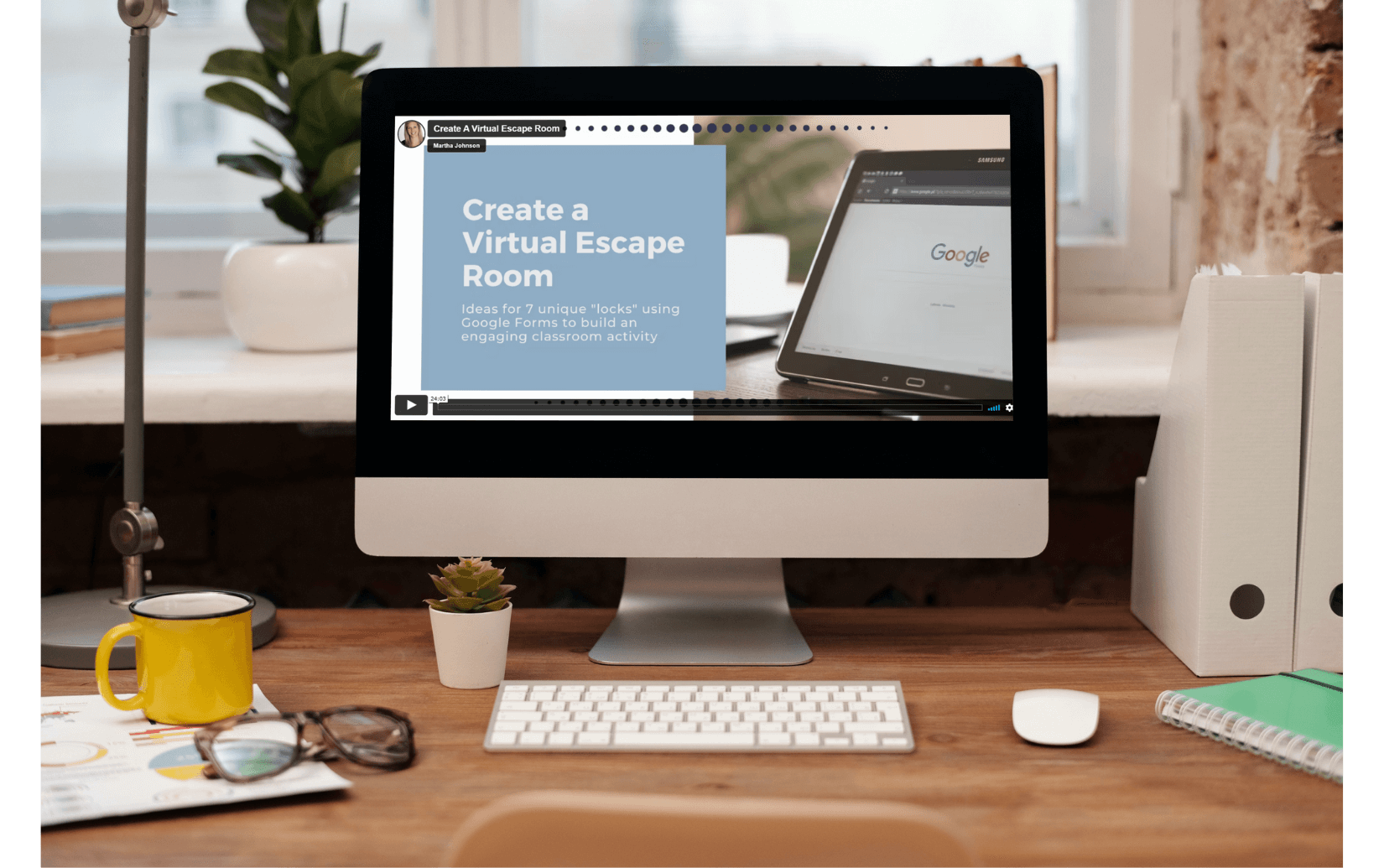
In this short tutorial video, I share how to create your own escape room for nursing education specific to the content that you teach.
Upon completion, you will have:
- Decided on the learning objectives specific to the content that you teach
- Created a storyline to engage students and keep their interest throughout the case study
- Identified seven different "locks" outlined in the video and how they can apply to the content you teach
- Learned how to share the virtual case study with your students so they can easily access the material regardless of the setting
It can feel overwhelming to start a virtual escape room from scratch. So, along with the video, there is a template for the exact Google Form I use in the tutorial so you can start creating right away!
💻 When to use a virtual escape room in nursing education
You can adapt an escape room to various settings, including classroom introductions, complex topics, or a review session. It can be an excellent introduction to active learning if you are getting resistance from students. After watching the short video, you will have a clear framework for developing your virtual escape room using Google Forms. There are alternatives to lecture, and you can create a flipped classroom one lesson at a time :)
-
Classroom introduction - An escape room can be an interactive way to review the syllabus or complete orientation to a skills lab or clinical unit.
-
Practice Next-Gen NCLEX questions - A virtual escape room format is less intimidating than a quiz format to expose your students to Next-Gen-style NCLEX questions. In addition, because it is not a test but rather an interactive case study, students can practice the questions and become more comfortable answering them.
-
Faculty development or presentations - Having your peers or audience complete an escape room is an excellent way to improve engagement. It can cover a variety of content, allows the listener “discover” information, and is unexpected.
- Job interviews with a teaching demonstration - We have had many members of our community use an escape room as their teaching demonstration during the interview process. Amazing! 🤩 It is an excellent way to make the activity interactive, engage with the interview panel and create a memorable teaching presentation that is different from the typical teaching demo.
🎨 Create your own virtual escape room
Ready to bring your nursing content to life with a virtual escape room? This quick tutorial video shows you exactly how to design your own virtual escape room using Google Forms.
You'll walk away with a custom case study tied to your learning objectives, a compelling storyline to keep students hooked, and a variety of lock types that are fun, but also promote clinical reasoning.
Whether you're teaching online or in person, this is an easy, creative way to boost engagement and give your students a memorable learning experience.
Conclusion
Virtual escape rooms make active learning easier. They offer a structured, repeatable format you can use each semester that helps students apply critical thinking without needing a full sim lab or hours of setup.
They can be created with tools you already use. Using something simple and free, like Google Forms, you can build interactive, scenario-based activity tailored to the specific course content you teach.
Students walk away more confident, with real-time problem solving skills, practice with teamwork, and clinical reasoning. Learners build essential skills in a format that’s engaging, memorable, and practical.

Martha Johnson
Martha Johnson, MSN, RN is a nurse educator and the creator of BreakoutRN. She helps nursing faculty build active learning into the classroom and clinical setting, one practical idea at a time, using tools that support clinical judgment, engagement, and real-world nursing practice.
Frequently Asked Questions
How long does it take to create a virtual escape room for my nursing course?
Creating your first virtual escape room may take a few hours as you plan the storyline, develop clues, and set up the structure in a platform like Google Forms. However, once you've built one, you can easily adapt and reuse the format for future topics with minimal changes.
Do students need any special technology or accounts to participate in a virtual escape room?
No special tech or logins are required. Most virtual escape rooms built in tools like Google Forms can be accessed from any device with internet access, making it easy for students to participate whether they’re in the classroom or learning remotely.
What kind of nursing content works best in an escape room format?
Escape rooms are especially effective for reinforcing clinical decision-making, prioritization, pharmacology, and pathophysiology concepts. Any content that benefits from critical thinking, sequencing, or collaboration can be turned into an interactive escape room experience.
What if I want to create an in-person escape room?
I've got just the thing for you!
I've create a full course on building an educational, nursing-focused escape room. The lessons will take you through idea generation, mind mapping out a plan, create puzzles, sourcing materials and finalizing the project.
You can learn more about it HERE.

